Every game featured here has been personally played by Shane before earning a place on this list. Rather than relying on reviews or ratings from others, Shane shares his own experiences, highlighting what makes each game enjoyable, memorable, and worth your time. From exciting adventures and compelling stories to immersive worlds and unique gameplay, these are games he genuinely recommends. Whether you're searching for your next favorite title or simply looking for a trusted opinion from an autistic gamer, you'll find honest recommendations based on real playtime and a genuine passion for gaming.
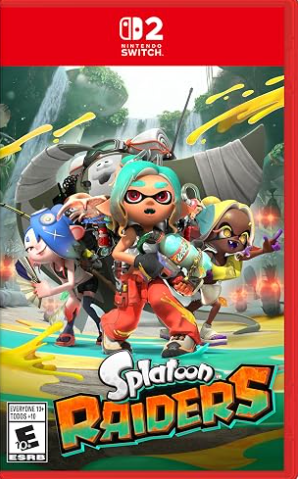

Splatoon Raiders (Rated E)
🎮 Splatoon Raiders is the first primarily single-player Splatoon game. An enticing concept, to be sure. If you’re unfamiliar with the series, I can thankfully say you don’t really need any past knowledge to understand the story of this entry. A fun idea is one thing, but execution is everything. So was this game a hidden treasure, or is it more of a lacking haul? Read on to find out.

Story:

In this game, you play as a pilot-turned-mechanic working alongside the band Deep Cut as they take on their side occupation as treasure hunters, exploring some mysterious islands in search for loot to help pay off Splatville’s debt problems. The three personalities of the trio are diverse enough to feel fairly fresh and distinct, and the mystery around the mystery of the archipelago can make for an intriguing hook. Though I will say there is no English vocals in this game. Or any languaged vocals for that matter. The characters speak in their own language, and thus reading the accompanying text is a necessity to understand what’s going on. I only say this because I know some kids can get bored from excessive reading pretty quickly. Though I will say aside from the mystery mentioned above, the story is fairly straightforward. It works for the kind of demographic the game is made for, but if you’re hoping for something more complex, you’d be better off searching elsewhere.

Gameplay:

Like all Splatoon games, the bulk of the gameplay involves shooting enemies with colored ink to defeat them, and painting your surroundings in said ink for various environmental advantages. If that sounds weird when phrased like that, don’t worry. It’ll make sense when you see it in action. There were plenty of new additions to the gameplay that I did quite enjoy. Namely you can choose from 3 different ink tanks depending on the playstyle you prefer: power, speed, and tactical. That offers a fun bit of personalization that I’ve always liked in games. Even if only a little. Additionally, there is a leveling system in the game, as well as the ability to upgrade weapons and abilities, allowing for ways to gradually become stronger against enemies in the later levels. You’re able to adjust the difficulty at any time, so you don’t need to worry about things being too hard or too easy depending on your taste. Though if I wanna be nitpicky, there are some times where you can be defeated by enemies in a manner that is unfair, like if an enemy attack’s knockback blows you backward over the edge of the arena, rendering you unable to make it back in time before you fall to your doom. You can survive falling once, but sometimes there’ll be so many enemies standing on the edge of the arena there’s no room to safely land back on it. But those instances are so rare that it’s not really a factor. I found the game to be a bit slow at the start, but once things got going and you unlock the more interesting features, it became pretty fun. Ironically the part of the game I enjoyed the least was the boss fights. They’re effectively damage-sponges, taking breaks between attacks to let you wail on them and incrementally chip away at their health. But every boss is largely dependent on enemy rushes, even outright making the bosses impervious to damage until you’ve defeated a certain amount of normal enemies at least twice in a fight. And that feels a bit momentum-killing to me, given it makes the fights go on even longer, and kinda replacing what should be a boss fight with just more gameplay that every other level provides. I was hoping for something a bit more inventive that bleeds together less with the normal flow of the game. But that’s just me.

Conclusion:

I would say I did enjoy this game. It took me 3 or 4 days to finish, and that is partially because I usually play games on easy mode. What can I say? I like to feel in control of whatever is thrown at me. It wasn’t anything too special as far as games go, but it was a pleasant experience I felt was worth my while for what it provides. As such, I’ll be giving the game a ranking of 7/10.

VIEW ON AMAZON

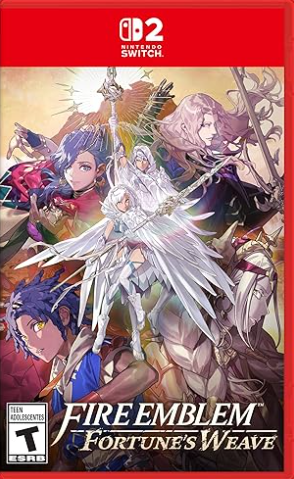
Fire Emblem Fortunes Weave (Rated T)

Fire Emblem: Fortune’s Weave is the spiritual successor to the massively successful Fire Emblem: Three Houses. A game that stands as my favorite game of all time. Set in the same continuity, with some carried-over story elements and characters, it has a lot riding on it after the previous, underwhelming experience that was Fire Emblem: Engage. The game retains the core elements of the series while also adding in new ideas and mechanics. So was this adventure worthy of standing alongside its legendary predecessor, or is it just a disappointment that didn’t live up to the hype? Read on and find out.

Story:

You play the role of an initially disembodied spirit summoned forth by the goddess Sothis to help save the land of Dagda, which has currently been laid to ruin by Balor, the god of the underworld. To accomplish this task, you are sent to meet the goddess of fate Fortuna, and utilize her powers over time and causality to venture into the past and prevent the disappearances of several mighty heroes that took part in the tournament known as the Heroic Games. Unlike in Three Houses, you are not locked into a given route by which hero you initially choose. You’re even able to leapfrog from one route to the other at any time if you so wish. Because though these heroes will inevitably cross blades at some point in the Heroic Games to win the ultimate prize of getting a wish of theirs granted, you can simply help whoever you didn’t pick win in their respective route. The game’s story is set in 3 parts: the Heroic Games, a war breaking out after that led to current events, and present day after you’ve saved whoever you deem to be worth saving and gotten down to the meat of your mission from Sothis. Each main hero is vastly different in personality and motivation, and have their own unique quirks in how to optimally achieve certain perks. Their paths shining light on different mysteries and fragments of the game’s lore. However, I should note that if you’re expecting your choice to have some big ramifications on the story, you’ll likely be disappointed. Who you save or don’t save doesn’t necessarily affect the ending. It just determines who’s alive to aid your cause, and who is not. What’s more, part 2 of the game focuses mostly on the stakes and character journey of only one of the four heroes. The others just happen to tag along tangentially if you choose them. And that can be deflating to players who preferred more of a spotlight on one of the other contenders. I should also emphasize that the base game by itself does leave some mysteries hanging in the air without the DLC campaigns to fill in the blanks. Nothing too important, but if you’re someone who wants to walk out of this with a complete understanding of the story, you’ll inevitably need to seek out that extra content. However, despite this being a game heavily linked to Fire Emblem: Three Houses, prior experience or knowledge from that game is not necessarily. Having played one simply enriches your understanding of the other and vice versa. And that’s a pleasant balance to strike. 

Gameplay:

Just like any other Fire Emblem game, this is a grid-based RPG similar to chess, but less luck based. You have various units with their own classes, growth potential, personalities, etc. This game also utilizes a calendar system similar to the Persona series, where you’re given a certain amount of time between story missions to prioritize how you’ll improve your army or pursue side acquisitions. And as you progress, you will be able to recruit units from all across the main hub of Dagsion to your cause provided you meet their requirements first. A good way to acquire characters you particularly like, or to balance out your existing forces with someone possessing talents they don’t yet cover. I found the time I was given between missions to be fairly reasonable. I was never particularly scrambling to get certain things done as long as I played my cards right. There are minor story beats or paralogues that are possible to miss if you’re not attentive enough, but usually it’s nothing of major concern in that the various routes tend to overlap in several places. So if you miss your chance to get something done in one route, you can simply make a point to try to accomplish it with the next hero you pick. As long as something gets done in at least one route, it’s counted as complete for all of them when the time comes to start part 3. It’s even possible to simply skip to part 3 straightaway without saving any of the four heroes, but I would NOT recommend it because this game’s difficulty can get pretty crazy at times. Especially in parts 2 or 3. Lots of enemy reinforcements and map hazards to navigate. Thankfully I was playing on casual mode, which means units don’t die permanently if they fall in battle. Instead simply retreating, and returning when the fight is over. The game also allows you the option to retain any EXP you received from a battle you lost in restarting it, effectively giving you an emergency switch to ensure you’ll eventually win after enough tries. That was greatly appreciated, but I feel it’s also somewhat used as a crutch to justify making the levels in the late game especially punishing if you don’t walk a razor’s edge in managing your time. In order to acquire the units you recruited and trained in a given route for a particular hero, you must complete part 2 with that hero. However, the option to skip part 2 and have any units in that party leveled up accordingly does exist if you’d rather not replay part 2 four times with different heroes tagging along for the same events. Again, a useful mechanic, but it seems made to address a problem I feel shouldn’t have existed in the first place. Thankfully weapon durability only depletes when you use weapon arts. Meaning weapons will not break simply from ordinary use. But I cannot stress enough the difficulty here is higher than what players might be used to from Three Houses. It starts off fairly simple, and gradually cranks things up as it goes. Minor spikes in difficulty happening at the start of part 2 and part 3. 

Conclusion:

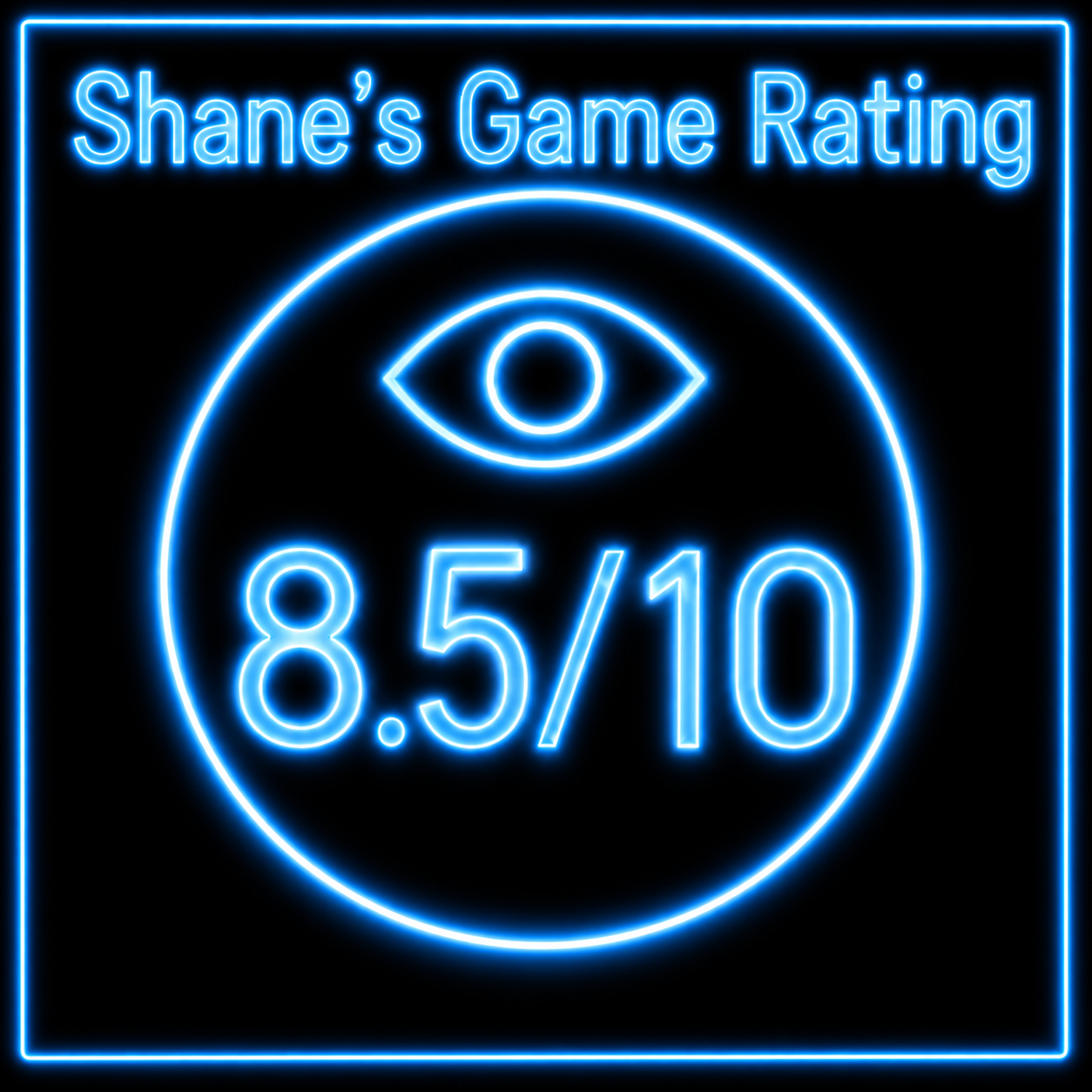
I will confess that Fire Emblem: Three Houses still outshines this game to me personally, and that’s through no fault of the game itself. Stories like that of Rhea and Dimitri simply struck me on such a deep core level, and the game is so sentimentally important to me that it’s really not easy to imagine anything topping that. Especially because this game has only one ending. But despite that, this was leagues better than Fire Emblem: Engage. And I wholeheartedly say it is indeed on equal footing with its predecessor. It’s an enthralling experience with many great characters, and with enough content to really keep any gamer busy and content for a good long while. I did not regret my time with this game, and it makes me pleased to consider what the next potential entry in this remarkable series may have in store. As such, I give this game a solid 8.5/10.

VIEW ON AMAZON